PE stretch film is one of the most widely used and effective packaging solutions in today’s modern supply chain. However, many misconceptions remain in how this material is selected and applied, directly impacting a business’s operational efficiency and overall costs.
With over 10 years of experience in packaging manufacturing and supply chain solutions, HCP has compiled a list of common misunderstandings from a technical standpoint, helping businesses optimize stretch film usage and build a more sustainable logistics system.
The thicker the film, the better?
Many believe that a “thicker film” automatically means “stronger protection.” In reality, thickness is not the sole determining factor of film performance.

Stretch film effectiveness depends on multiple variables:
- Elongation capacity
- Cling strength
- Mechanical durability
Increasing thickness can lead to higher raw material costs and unnecessary plastic use. Without optimizing other technical properties, a thicker film may still underperform compared to high-tech, thinner alternatives.
Stretch film can only stretch up to 200%?
Traditional films typically have elongation rates between 70% and 100%, resulting in high material consumption.
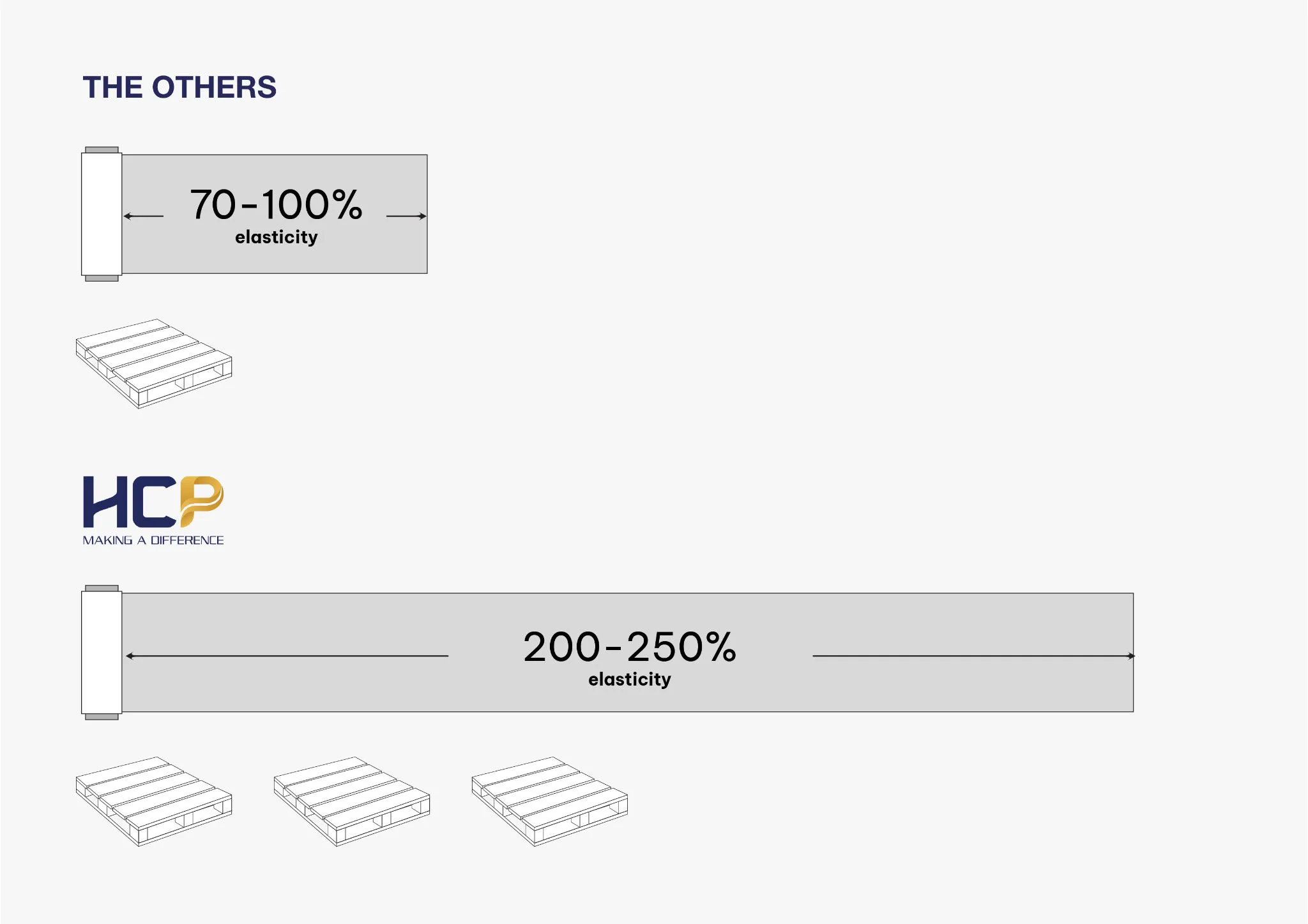
However, advanced technologies now allow for elongation up to 200%–250%. This means the film can be stretched multiple times before being applied to a pallet - while still maintaining strength and consistency. As a result, businesses can significantly reduce the amount of film used per unit of product while improving load stability during transportation and storage.
Choosing the right film with an appropriate stretch ratio for your wrapping machine is key to optimizing material usage and reducing per-pallet packaging costs.
Manual wrapping saves more than machine wrapping?
Due to concerns over machine investment costs, many businesses still rely on manual wrapping to “save money.” However, this decision is often based solely on the unit price of the film roll - ignoring the real cost per pallet.
While manual wrapping may seem flexible and cost-effective upfront, it introduces multiple inefficiencies: inconsistent stretch and tension, increased labor time and costs, high material waste due to poor film control.

In contrast, combining high-performance stretch film with automatic or semi-automatic wrapping machines allows businesses to: precisely control tension, stretch ratio, and wrap cycles, improve overall packaging efficiency, significantly reduce per-pallet costs.
Read more: Product Test for PE film pallet wrapping: Wrapping export furniture pallet
Cheap stretch film means cost savings?
Opting for low-cost stretch film is a common attempt at saving money—but it comes with hidden risks. Cheap films often suffer from: inconsistent material quality, poor elongation, weak cling, low mechanical strength.
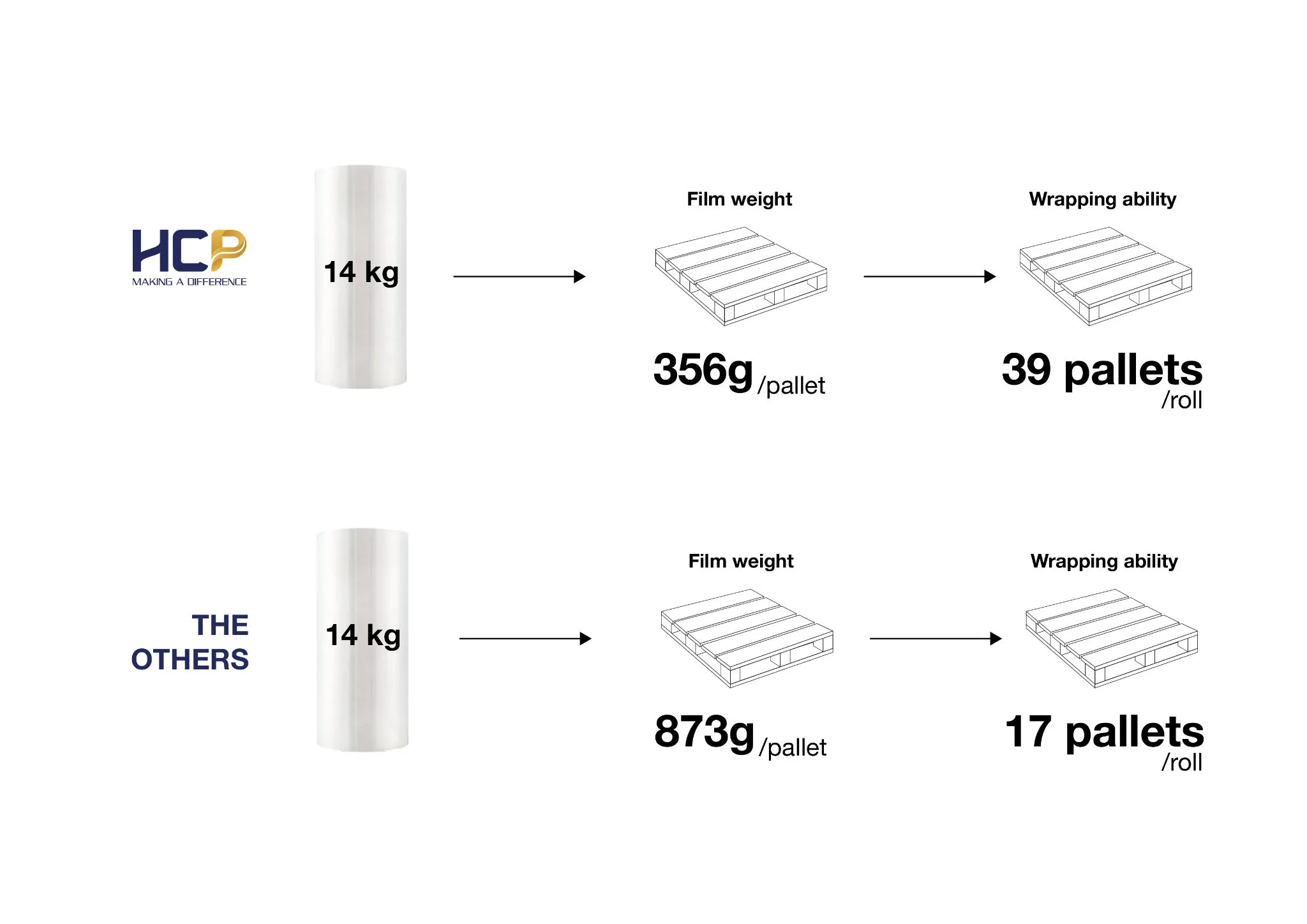
To compensate for these flaws, users are forced to increase wrap layers or switch to thicker films to ensure load stability. This leads to: increased material costs, longer packaging times, higher risk of damage during transport. In total, the actual cost per pallet may exceed that of using premium, high-quality films.
Wrapping machines are ineffective?
Many small and medium businesses believe that pallet wrapping machines are unnecessary, assuming manual wrapping is sufficient. However, this view often overlooks long-term benefits.
A pallet wrapping machine not only ensures precise control of tension and wrap cycles, but also guarantees consistency in every wrap — a key factor in optimizing film usage and enhancing pallet load stability. Beyond material efficiency, automating the wrapping process also significantly reduces the risk of injuries caused by repetitive manual labor, while improving safety and consistency in the production environment. Additionally, automation reduces the risk of repetitive strain injuries from manual labor and enhances safety and consistency in production environments.
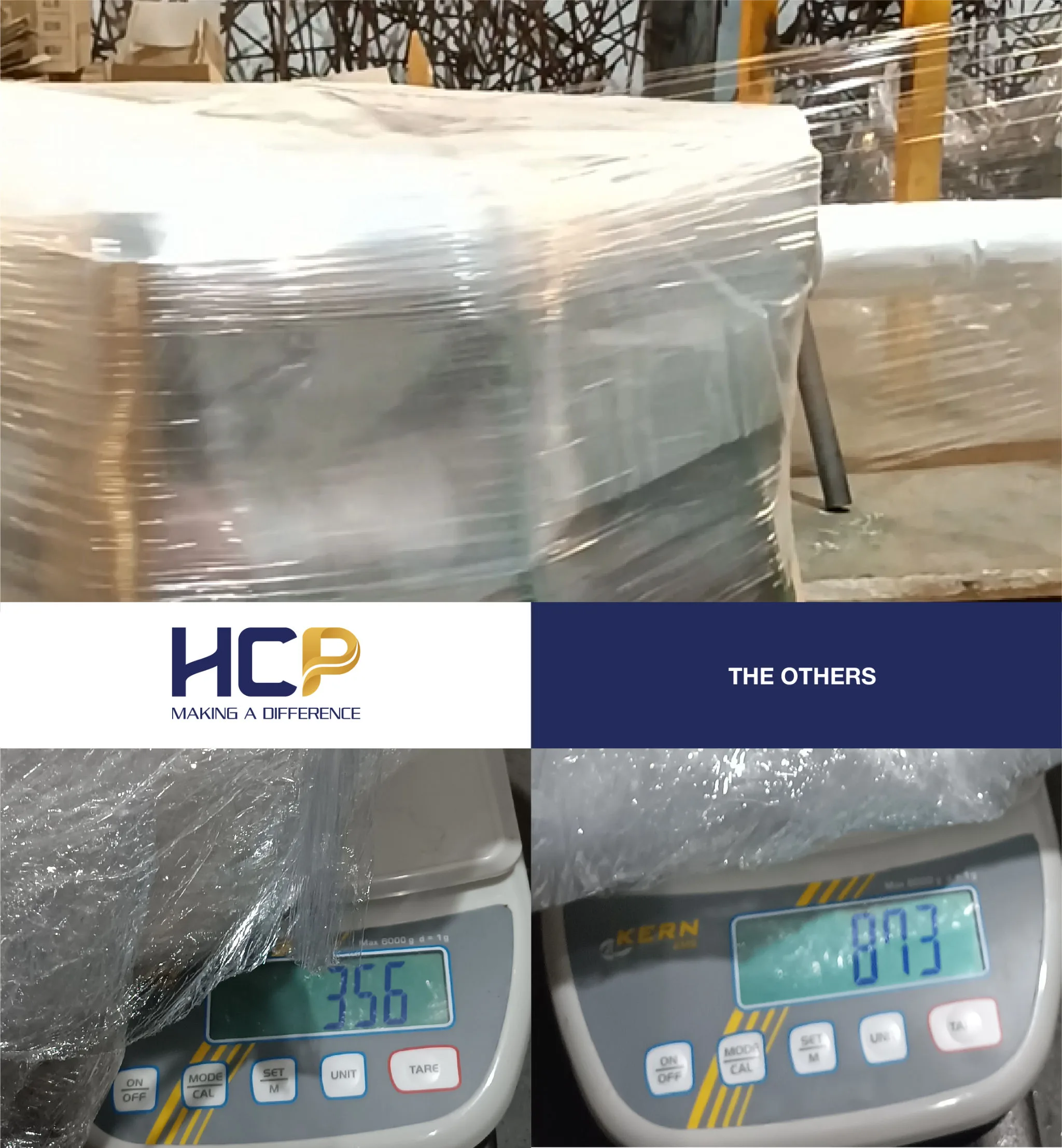
In the medium to long term, this is a high-return investment, even for small businesses moving toward automation.
Does a neat wrap mean a secure pallet?
A common mistake is judging pallet quality based only on the outer appearance of the wrap. This visual assessment can be misleading.
An effective wrapping process must ensure: load stability, protection from dust, shock, and vibration, optimized material usage. To properly assess wrap performance, apply real-world tests such as: vibration test, acceleration test, simulated transport scenarios.
HCP recommends integrating technical evaluation methods into your quality control system to ensure safety across your logistics chain.
Can you really reduce film usage by over 50%?
Some companies remain skeptical that film consumption can be reduced by 50% without compromising performance. But it’s entirely achievable with a fully optimized packaging process.
Savings depend not just on thickness, but also on: high stretchability, film consistency, compatibility with the wrapping machine.
Low-performance films often require more wrap layers to stabilize the load, increasing cost. In contrast, high-tech stretch films with 200–250% stretch ratio reduce usage while maintaining load integrity—optimizing logistics costs.
Are all pallet wrapping machines the same?
Some assume pallet wrapping machines simply rotate the pallet. However, achieving cost-efficiency and high packaging performance requires pairing the right film with the right technology.

Modern wrapping machines feature: pre-stretch systems, multi-level control, adjustable tension, programmable wrap cycles.
These technologies ensure: optimal film usage, high load stability, consistent packaging results. In today’s industrial packaging environment, this level of control is critical.
Understanding and choosing the right stretch film and wrapping system not only helps businesses reduce packaging costs, but also improves operational efficiency, enhances product safety, and contributes to a more sustainable supply chain. With over 10 years of industry experience, HCP is committed to supporting your business with high-quality PE stretch films and smart, efficient packaging solutions tailored to your needs.